
Malachi Lily x Collective Lit
Plus, Sit & Write #322

Greetings, friends!
This week I’m excited to share the first in a series of conversations with writer friends. You’ll find the full interview near the bottom of this email.
MEET MALACHI
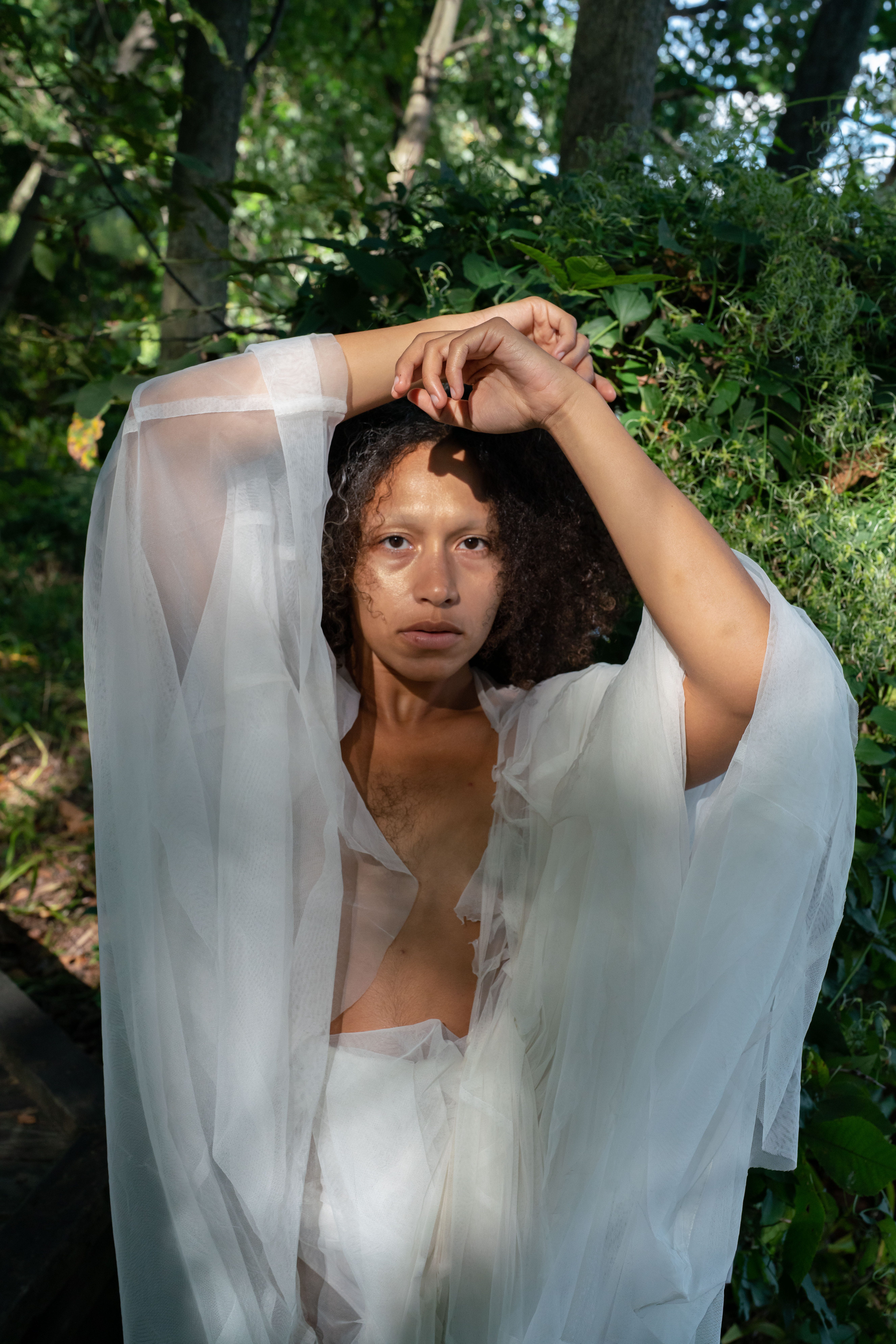
Malachi Lily (they/them) is a neurofunky, liminal Black person rooted in Philly. Lily writes speculative fiction and metaphysical commentary through magick, Black-anarcho politics, and nature wisdom, deconstructing colonial fears around the unconscious, sexuality, and femininity. Their fiction and nonfiction draw heavily on equal parts ecological naturalist study and divination. In 2023, they were a Tinhouse and Roots.Wounds.Words. fellow, and in 2024, Lily was a writing resident at Stove Works. In 2025, Lily became a Science Fiction and Fantasy Association Fellow and a Trans Journalism Association Fellow.
“There are things humans can learn when we see them far from ourselves. I’m hoping that people will be more open and willing to hear those things if they feel like, ‘this isn’t about me.’ ... Until it seeps into your skin and into your blood and has started to mutate you…” - Malachi Lily
SIT & WRITE
Let’s get some writing done this weekend! If you’re new, please read this FAQ before joining the call.
WHAT: Sit & Write #322
WHEN: Saturday, 4/11, 11:00am-2:00pm ET
WHERE: Zoooooom
LINK: https://us06web.zoom.us/j/86056178326?pwd=4BogFgkj023D7bS8ZymaObT7RWTYW7.1
MEETING ID: 860 5617 8326
PASSCODE: 894010
Warmly,
Julian Shendelman
Collective Lit
collectivelitgroup@gmail.com
THE INTERVIEW
Here’s the transcript of my conversation with Malachi Lily. Enjoy!
Collective Lit:
What type of writing do you do? And do you tend toward any particular genre or format?
Malachi:
I am all things speculative fiction. That is where I reside. I feel this reality has a lot of representation and so I like to represent other realities. Particularly, I like to merge fantasy and sci-fi together and I believe that horror can be a healing genre instead of just a fear-creating genre. So, those three often are some sort of Venn diagram blending together in any given story I write.
Collective Lit:
Is most of your writing self-published or do you pursue publication? Is that a part of your process?
Malachi:
Yes, I came to terms a few years ago with the fact that it is really important to me to be published and read widely. I think what fueled this tipping point was actually rage, particularly against authors like H.P. Lovecraft and J.R.R. Tolkien — one defined the Eldritch Horror genre, and one defined the high fantasy genre. And they were both very racist, and did it in super racist and colonial ways. If I am born too early for the full-on mega revolution, I might as well try to get published and get my name out there because my freaky non-colonial/anti-colonial stories deserve to be read just as widely.
Collective Lit:
What do you look for in a publication, if you don’t mind me asking?
Malachi:
A big marketing budget! [Laughs] It sounds so silly. But one of my favorite art forms is animation, and when I write, I always imagine things animated. I would love to hire artists to create animatics for scenes in my book, or even a trailer. That would be such a dream, because I think it would help people understand the strange thing I’m doing.
I just want to be expansive and creative. As you know, I’m also a visual artist. My current largest-form project is also going to be illustrated, which lends itself to that kind of marketing. But that takes money.
Collective Lit:
I always think about how Octavia Butler had a very clear vision of her future — I don’t necessarily buy into manifestation, but she was clearly manifesting it. She made things happen for herself, in a way, and really saw what was coming. Whether that’s something that she built for herself, or something that came to fruition because she envisioned it, or some combination of those things… Either way, it worked out. I’m curious if you look into your own future in that way, and if so, what do you see?
Malachi:
I like that you mentioned her. Recently, someone had posted, on Substack Notes, a piece of paper with Octavia Butler’s handwriting. She had written, essentially, affirmations for herself about her book. I took that picture and I printed it out. I shifted it on the page so there was room for me to write in the middle and I wrote my own affirmations between her text. It’s right above my head — I can look up and see it. The main repeating words are ‘word weaver, world maker, storyteller, best seller, yes.’ And I’m like, yes, that is exactly it.
As I said, I love animation, and I would love to create works that people who work in those industries read and think, ‘this has to become a visual medium... this has to be turned into a movie or a television series.’ My preference would be a television series because that is the modality I see things in, but it’s not an art form that’s accessible to me. Words are my craft, and they’re where I feel I excel, but I want them to be words that vibrate so much that they feel naturally adaptive. So I want them to be read widely and experienced that way, and also experienced in the visual medium of animation. That’s my big goal.
Collective Lit:
You’ve talked about visual arts a couple times in this conversation. Which brings me to this question about how the different forms you work in, or the different mediums you’re drawn to, influence your writing — or vice versa. Is there a consistent flow in one direction or the other? Or is it sort of mutually inspirational?
Malachi:
Conceptually, they’ve been very divided. My writing practice has been for me and my art practice, and my illustration has been for editorial and commercial work. And I have not, since, like, the early quarantine days, been able to make visual art just for myself because I’ve been focusing on my writing career. But I know that for this large-form project about my planet, Mother Kow, I’m going to create a lot of illustrations for the book. Not narrative illustrations, more like creating a naturalist tome of speculative biology and speculative evolution, so drawings of nature and things like that. And I feel very fueled and excited by the way I can finally bring my artwork into my writing.
I’ve been thinking about how I want this book to be more ADHD friendly than a lot of other writing. I’m very ADHD, and I feel a lot of sorrow and frustration because I have a hard time reading. It feels really embarrassing. But then I look at a book, and I’m like, you’re not friendly to my brain. It’s just blurry lines of gray, and the same thing over and over and over every page. It just makes my brain do a static noise.
I’ve been thinking about putting little illustrations in the margins, notes in the margins... about each page having its own shape, even though it’s telling a linear story, to create a visual diversity to keep people engaged. And to write very short chapters, because when I finish reading a chapter, I get a little dopamine sparkle. [Laughs] So, if I can make the chapter shorter, I can catch someone’s attention span enough to finish a chapter, and they’ll be like, ‘that felt good; I think I could do another,’ and keep going. So, those are the ways I think my illustration and writing will come together going forward. They’re not very merged right now.
Collective Lit:
It’s interesting how people can have these totally separate practices — sometimes they make sense to weave together, and sometimes they just don’t. I would love to talk more about your relationship to reading; I really related to what you said about the shame that comes up around that. I went a bunch of years without reading a single book; after grad school, my brain was just cooked. It’s taken me a long time to repair my relationship to reading and it’s still a work in progress. So I’m curious, are there modes of reading that work better for you? And what tools have you found helpful in reconnecting with other people’s written words?
Malachi:
I think the biggest supportive tool for my reading has been the outdoors. I read so much more when I’m on the beach or sitting on a hammock in the sun or just outdoors in some sort of way. I feel very swaddled by the sun. I’m very much a heliophile. I love to be cooked. I love to be a little rotisserie chicken, slow rolling in the sunshine.
The ambient stimulation of being outside helps me focus on a book — I don’t have access to my laptop or all these other things I could be doing like when I sit in my room and try to read. This means I mostly read when it’s nice weather outside. [Laughs] You’d think cold weather is the time to curl up with a book, but any time I curl up with a book while it’s winter, I fall asleep. [Laughs] I’m like, ‘mmmmmm, so cozy.’ So my season for reading is coming. The warmth is coming.
Collective Lit:
The books are ready for you! Does that extend to your writing practice as well? The need to create the right environment to focus on it? Or do you feel like the writing comes more easily to you?
Malachi:
Writing is different because all the stimuli live in my brain. When I read, all the stimuli in my own brain compete with the book. There’s so much that wants to come out at any given moment. The issue is actually choosing one thing to come out. Like, today, I was like, ‘I’ll work on this short story. And I started, and it was like, ‘nope.’ And I was working on my novel. It’s like they’re all in competition for my attention.
Once I sit down to write, it’s not difficult to write for me. I don’t really experience writer’s block; I feel very spoiled for choice of what goes on in my brain. But just because there’s a lot going on doesn’t mean every idea is a good idea. So I have to filter through a lot in my brain. It’s constantly churning things out. I could be in almost any environment and be able to write. And sometimes I do write outside, usually in a sketchbook, and then I’ll transfer it to my laptop indoors. But yeah, it can be anywhere, in any way.
Collective Lit:
It sounds like there’s a discernment process that you go through when you have this influx of inspiration and ideas. Is that a conscious process? And if so, what factors determine which stories you chase?
Malachi:
That’s where the magic part of ‘The Magick Artist’ comes in. Divination is a key part of my practice. That’s one aspect I want to integrate more into my Substack writing — like, showing that aspect of my practice more. I do divination for everything, like asking which story I should focus on.
It always starts with ‘what is the lesson or emotional core of the story?’ Because as an energy worker, and I can’t speak for anyone else, I cannot indulge in a story that could be harmful to the psyche of the collective. That’s not something I get to do. I have to make sure that all of my stories are in some way supporting our experiential evolution. I had a vivid horror dream a few months ago. It didn’t feel like a nightmare because I kind of felt in control. And part of that dream was seeing how successful my career could be if I just brought out all the nasty shit that was in my head and put it on the page, and then put it on the screen.
But I don’t want to do that. I don’t want to do that to people. I don’t want to generate fear. I want to heal our relationship to death. And that’s a different kind of writing. So I’m always asking my tools, you know, what are the core lessons that I can bring forward in the stories? And then I’ll ask questions about the characters’ specific lessons and journeys, and what they symbolize and represent. All of my stories have to include that spiritually educational element. Which isn’t always fun, but is necessary to my practice.
Collective Lit:
And what’s your relationship to editing like? Does divination play a role in that as well?
Malachi:
I like editing more than writing. That’s one thing that I’m experiencing right now with my novel. I have this deadline for myself of when I want the first draft of the novel to be done. And I have started writing it, but I haven’t made it past the first little arc because I keep going back and editing it. Because I feel such joy in the editing process, and I feel that’s where my story comes to life.
I have access to a lovely writers’ group that meets on Wednesday nights and gives really great feedback. My Friday group is delightfully generative — we don’t even talk. But the Wednesday one is for feedback. And that’s very recent; I’ve never had a group like this before. I’ve never had a successful workshop group.
It feels so incredible, and it really makes me want to get into editing even more. As for where divination comes in, for my Mother Kow book — the first one’s called ‘Blight’. For ‘Blight,’ I completely rewrote it (conceptually, not the chapters) this past summer.
That took a lot of divination to do that rewriting. I do consider that to be editing because there was a version of it before. I did a lot of layers of world-building before putting pen to paper. Because when I tried to write chapters before, it felt like I was leaving all these gaps. I decided to take the time to figure things out so I can move forward with full confidence in what this world looks like and how things function together — literally, the physics and biology of the world, as well as the characters’ interpersonal development. Divination definitely came in handy when rewriting all of that.
Collective Lit:
Is there a part of your writing process that can grind things to a halt? Or do you have a pretty good flow from beginning to finished, whatever that means to you?
Malachi:
Yeah. The internal thing is, I think, the ADHD, the ‘starting a new story’ sparkles... and then ‘starting a new story’ sparkles... and then ‘starting a new story’ sparkles. [Laughs] And then I have a bunch of first halves of several short stories and no back halves of any of those short stories.
It can be difficult to finish things. I have to remind myself about all the happiness I feel when I do finish something. But I think the thing that mostly gets in the way externally is having to survive under late-stage capitalism. All the varying odd jobs that I have to keep things afloat often have to take priority. I believe passionately and foolheartedly in my writing practice and in my Mother Kow series bringing me financial abundance in the future. But it’s future money, and I have to pay the bills now. That’s definitely the biggest struggle.
Collective Lit:
I feel like a lot of writing advice I hear makes assumptions about what the writer has access to and has time for. Is there any piece of writing advice you’ve gotten that made you be like, ‘that’s real rich,’ or anything you heard and thought, ‘well, that’s not taking reality into account’?
Malachi:
I think it was a Tin House panel, and one of the authors, I don’t remember his name, was like, ‘My advice? Marry rich.’ [Laughs] Just like, fuck off! Yeah.
I went on a rant about this recently, as you may have seen on my Substack, about how the ‘residency industrial complex’ is actually SO unfriendly to artists. Especially artists who have responsibilities in their lives, who don’t have a lot of resources. The audacity to be like, ‘let’s strip away all of your community and all of your personal resources, take you away from your safe spaces. Come to our cabin in the woods that you’re gonna pay $3,000 for. Maybe we’ll give you a $200 stipend for the whole month, or the three months. That’s how you’re gonna make the best work.’
It’s just ridiculous, you know? I have people that I do carework for in my home and outside my home, and it impacts them when I physically leave. It’s very difficult to gather the resources to go somewhere else. Traveling is expensive. I was reading one residency where they straight up were like, ‘you’re not allowed to work on anything else except for the project you applied with.’ Which means if you’re working digitally and you’re like, ‘okay, I can make this work because I can do my meetings from 9 to 2, and then I’ll be able to spend the rest of the day writing,’ they’re like, ‘nope, you can’t work. And also here’s maybe a hundred dollars for the month.’ Like it’s just so disrespectful.
I was only able to attend the Tin House fellowship and the Roots.Wounds.Words fellowship because of the pandemic stimulus checks that came out. That’s what mine went to. I decided to make that investment in my career, and I’m glad I did, but I don’t know if I could have done it if we hadn’t had that money given to us.
Collective Lit:
Yeah, thinking back to that newsletter you wrote on the topic, I was already on the same page with you about how ridiculous it is to be expected to pay an extraordinary amount to go on a retreat or fellowship. But I hadn’t really thought about what it means to be asked to leave your home space. That was revelatory for me, that was helpful to read. I was also just thinking about virtual retreats, which I see a lot of advertisements for. I’ve never attended one and I’m curious if you’ve ever tried. And if so, what did you think of that experience?
Malachi:
Roots.Wounds.Words. was digital, and Tin House was digital. I’m actually attending one this Monday: Narrative Shifts. The shape of Tin House and Roots.Wounds.Words. was nearly identical. The difference in the structure is that Roots.Wounds.Words. is only people of color, which was a wonderful experience. It was my first fellowship, residency, anything. That was really beautiful. So you have a cohort, and it was rapid workshop style — different people were read on different days, and you gave feedback to them. I found myself embracing it because it was my first time doing anything like that.
But I kind of loathe that structure. I can’t stand getting into a room of strangers and rapid-fire reading each other’s stuff because I know how much feedback I give other people, and I almost never receive that amount of feedback in return. That always feels really frustrating. I wish those times were spent more generatively. This could be my ADHD speaking, but I love the idea of co-working together and talking about what we’re writing and what we’re working on. Or we could ask each other questions about process and concepts.
I recently attended Blue Stoop’s Novels in Progress event at the library. It was very fun. I had a great time. And the first reader didn’t receive any questions during the Q&A. He asked questions to the room and received answers. And I was like, that’s what it should be! Like, ‘I’m taking this opportunity to pick all y’all’s brains.’ I wish there had been more of that mutual exchange [at my past fellowships] — in the workshops, we largely weren’t talking to each other. We were talking about each other’s things. And only about one person at a time. I felt like there was an opportunity for so much more interconnection if only we could have different time slots to work together, talk about writing, ask questions, and things like that. I did leave with friends from those programs, but I feel like there were people I missed out on connecting with because I wasn’t able to really talk to them in that way.
Collective Lit:
Yeah, workshops can be really tricky, even the ones that are questioning what a workshop should be are often still adhering to the basic format. I think the same is true of residencies and retreats. If you had to envision a radically different workshop, a radically different retreat, or some other supposed staple of a writer’s life, how would you reimagine it?
Malachi:
I’ve attended two in-person residencies thus far, two very different residencies. I attended StoveWorks in 2024 and Chateau d’Orquevaux in 2024. And Stoveworks was probably one of the most isolating, lonely times I’ve ever experienced. I’m so glad I only did a month. It is a residency largely designed for visual artists, particularly those working with machinery. They have all sorts of big machinery. I can’t even name them because I don’t work with the machines, but if you want to work with wood, you want to work with metal, you want to work with melting shit, printing presses, they have it all. And then there’s the writer who’s in the tiny room with the desk and the office chair, and that’s it. [Laughs] So I was already kind of an outlier in the collective as the only writer.
But yeah, it just meant we were alone most days. Food was entirely independent. They had a kitchen, and you had to make your own food. I fostered a collective environment because I was like, well, I’m sad, I’m going to cook for everyone now. I encouraged people to pool their food resources together, and then I would cook for them. And in exchange, I was just like, ‘I don’t want to clean the kitchen. But I’ll cook for folks.’ There was a survival aspect also, because I got there thinking I’d have food stamps, and my food stamps were stolen. I intended to share meals even if my food stamps weren’t stolen, but it became a part of survival because the residency didn’t really help me very much. They were like, ‘well, there’s the shared pantry that has… maybe quinoa in it.’ I was like, ‘thanks…’ There was no stipend, but it also didn’t cost anything. I taught a class there and got a hundred dollars from that. But they didn’t provide us a lot of resources in that way.
And again, I was so lonely. Stoveworks is in Chattanooga, Tennessee. It’s an old factory that faces a huge military graveyard on one side. And on the other side, an ominous factory that I think makes lids for… things? And it just was making kuh-chhhhh, kuh-chhhh, kuh-chhhh noises all the time. And the building was definitely haunted, so that also contributed to [my loneliness]. Maybe if I were, I don’t know, on some like beachside cliffs overlooking Caribbean waters, it would have been different.
But I did kind of have a little bit of that picturesque experience with Chateau d’Orquevaux. I don’t, by my definition, consider it a true residency because it costs money. They gave me a scholarship, and that’s why I went. But I think if you are charging people, you are a retreat. And maybe you provide things for the retreat, but it’s not a residency with the artist in mind.
We are just your products, you know, we are your money makers, and it’s just a different thing. It’s like a fancy vacation, you know? [Laughs] It’s a different vibe, because everyone at StoveWorks, at the very least, were all people trying to survive by their art practice. And in that way, we were connected. We were fuckin’ in that grind — our hollow cheeks, our souls poured into our work. And that wasn’t the case for everyone at the Chateau; there were a lot of vibes of like, ‘I’m wealthy and I just get to paint landscapes and that’s it.’ And I was just like... we have different lives [laughs]. So that was at this beautiful chateau in the French countryside, overlooking a little waterfall and pastoral stream. They provided food and things like that. It was better because there were also five other Black people, which wasn’t the case at Stoveworks. So, in that way, I definitely felt like I had more community, which makes a difference. Which is why things need to be resource accessible because of racial, financial discrimination [Sigh]. I was really glad that they were there.
I wish there were residencies that had resources where they say, ‘okay, we have $3,000, and we picked you as our writer or our artist. And you can take that $3,000 and you can put it towards coming and staying at our house in the Pacific Northwest redwoods. Or we can give you that money to create things at home and support what you need to do at home.’ And then their other programs would be with people in their own communities. And that’s how they would generate other forms of income. But I just feel like if residencies really cared about the work that we’re creating, they would ask us what we need. Maybe there’s someone for whom going to the Redwoods is exactly what they need. And they’re like, ‘Get me out of this city. I want to go there.’ And there are some people who are like, ‘This means I do not have to do so much gig work. And I can just focus on writing my novel.’ (Me, that’s me [laughs].) Then, accountability could still be some sort of presentation at the end, whether digital or in person. Or maybe they fly you out for a celebration for just a few days, or something like that. Soooo many of the residencies don’t actually consider what we need.
Collective Lit:
We’ve been talking about survival a bit and I’m curious: in your day-to-day, as you’re as you’re making work and moving toward finishing things, what are the key ingredients in the recipe of your survival as a writer?
Malachi:
I’ve been trying to figure that out... what would help me work on this novel and meet the deadline I’ve set for myself. I want the first draft done by my birthday in 2027. So it’s in September. For that to be done, I would need to feel like things are paid for.
I’ve been applying to a few things, and I’ve had some other potential inklings of more structured job opportunities come up. I’ve been considering them because they satisfy the money part. I would be able to pay my bills. But you lose the time part of it. I don’t know what my energy is gonna feel like if I work a 9-5, then go home. I know people do it all the time, but I think because of the structure of my life, because I am a working artist, producing this novel is tied to my survival. As opposed to having a job or lifestyle that allows you to survive, and then you write a novel solely because your heart needs to. Those are two very different novel-writing experiences.
I know it’s a risky gamble because, of course, I could put it out in the world and no one might give a damn. That’s highly possible. But I’m choosing to invest and have the audacity to say, no, people are going to care about this, and they’re going to want to give me money for it. Because that’s a part of the artist’s experience: that nice little dollop of delusion. [Laughs] It’s required... a manageable madness. I don’t know what my energy could feel like after [working 9-5] because it’s not like I have this career and then like, ‘oh it’d be lovely to get my novel out and if it takes a decade, it takes a decade.’ No, I need this career poppin’, I need the short stories published, I need this novel published, I need things to be rolling. So I do need concentrated time to get this novel done, because I already feel like I’ve taken too long on it.
I hear a thousand writers being like, ‘let it take the time it needs.’ I hear you besties! However, I do feel my career depends on this novel getting out. And like, it is not useful to what I want to do to pour a lot of energy into things that aren’t this. But things that aren’t this might give me money. [Laughs] I’m on the hunt constantly for works-in-progress grants or programs that would force me to stick to a schedule or give me resources.
Collective Lit:
I’m hearing that these ingredients for the recipe of your survival right now are structure, time, money. I’m curious — are there ingredients that are already in your pantry, if I’m extending the metaphor? What do you have now that is keeping you going?
Malachi:
I have the stubbornness that led me to become a freelancer in my early 20s. I did one internship that required clocking in, and I was at like a museum that I loved, and I was like... pain. Pain! Being on your time is pain! [Laughs] So I know that whatever jobs I want to do, I want them to be remote. I want them to be in my own space. I can run events or things like that, but being able to move in my own space, wear what I need to, and be where I need to feels most friendly to my brain. I do have a life that allows me to do that. And for that, I’m really grateful.
Almost all of my friends are artists and writers, so I have a community of people struggling, succeeding, and dreaming at various stages, all together. I’m always grateful for that. I have friends who I have compatibility with, who understand that my love language is co-working. I finally feel like I have friends who just get me, and I get them. There’s this mutual understanding that we don’t need an elaborate activity to feel connected with each other, to feel like the friendship’s flourishing. We can just share space and write together and that’s been really beautiful. I’ve also found loved ones and partners who are that way as well. Being able to have people in my life who are like, ‘this isn’t crazy, because if you’re crazy, I’m crazy.’ And I’m like, ‘we’re crazy.’ [Laughs]
My mom has been in the arts pretty much all her life. That’s why we don’t have a lot of money [laughs]. But it meant that as a child, I was seeing adults in art fields all the time. It never felt far-fetched to me. I feel very privileged and grateful to be able to spend my early childhood dancing at the UArts dance studios while my single mom had to work. She was like, ‘That studio is empty. Go put on some music and just dance.’ And that’s how we entertained ourselves.
She had artist friends, and they, to varying degrees, made their kids do art for better or worse. My mom listened to us and what we wanted to do. Not all of my friends’ art parents were like that. There was a lot of forced performing. But I didn’t have that at all; it was very wanted, chosen, and desired by me. For that, I feel really grateful.
Collective Lit:
It sounds like having a community of artists who believe in what you’re trying to do has made a big difference.
Malachi:
Yeah, absolutely. I think if I had grown up in a family of scientists or doctors, things might feel different. But I’ve always been around artists my whole life, so the audacity is innate.
Collective Lit:
We’re nearing the end of our time. So I want to ask, what is your pet project, your favorite work-in-progress right now? What’s your baby right now?
Malachi:
I feel myself psychically covering the ears of half a dozen projects, [laughs] I don’t want them to hear they’re not the favorite. But the baby I am gestating, my heart and my soul, are the Kow Chronicles, as I’m calling them: my sci-fi fantasy trilogy about a sapient planet named Mother Kow.
This project blends everything that I am, all that I love. I am a huge science nerd, a biology nerd. I wanted to be a marine biologist since... forever. That was the first job I wanted to do. So this project really combines my love of thinking about nature and being inspired by nature. I chose not to base this book on human history in any way. All of the conflict in the book is driven by nature. I think there are a lot of conflicts in the book that people will be like, ‘there’s no way this isn’t from humans.’ And I’m like, we have a lot more in common with a lot of different species than you’d think. There’s so much drama in nature. On Mother Kow, there are no humans. There is no money.
So I’m writing a book for humans in a place where there aren’t any humans. And that’s a big challenge that I’ve set up for myself because humans are inherently selfish, and we need to see ourselves in the story to feel connected to it. It is a challenge that I have given myself to make this alien world emotionally accessible. Part of the reason I’m doing that is that I feel there are things humans can learn when we see them far from ourselves. I’m literally bringing the most alien thing to teach people something very intimate. I’m hoping that people will be more open and willing to hear those things if they feel like, ‘this isn’t about me.’ ... Until it seeps into your skin and into your blood and has started to mutate you. And then it’s too late, and you realize, wait, this has been about me all along! [Laughs] That’s my hope at least.
I’m speaking vaguely because I don’t want to spoil anything. That said, to ground it a bit more in the book’s characters, the story largely follows a very sassy little outcast creature. His name’s Cavern, and he is psychically deaf. So everything on the planet can speak telepathically, but he cannot. So when he becomes infected by this mutagenic disease, it’s unable to take him over — it forgets what it’s doing because it no longer can connect to its hive mind. So Cavern and this blight entity become a symbiotic being, and together they try to figure out why the blight is happening before all of the varying cultures of the jungle and savannah tear themselves apart trying to figure it out themselves, Cavern will receive this inner insight (from this new entity that’s a part of them) as to why the disease is here at all. So, if you like smol angry boys, you will probably like Cavern.
And then on the other end of the spectrum, I have tall tree ladies. There is the Dryad Conclave, a warrior conclave of tree women who are going about the disease very aggressively. And they are part of the kind of upheaval happening in the environment as they try to attack the disease and its mutants head-on. You will follow a Dryad named Anemone, who is an archivist in her culture but really wants to be a warrior, and will do whatever it takes to be seen as a warrior, for better or worse.
So those are two of the main characters that we’ll be following. Smol angry boy creature, sad tall tree lady [laughs].
Collective Lit:
Sounds like an exciting project! You said it’s a trilogy — where are you at in the writing process?
Malachi:
I have a lot mapped out but I’m working on the first book, Blight, and I’m on the first arc — like I said, the chapters are going to be very short and there’s multiple perspectives so the arcs will start with “The Book of _____” and it will name the character that the POV is of, and then within that book there are different chapters.
I’m on “The Book of Big Sister,” which is not a character I named here, and I won’t say anything else about her — but the first arc is “The Book of Big Sister,” who will introduce us to the world and the story.
Collective Lit:
Awesome. I’m so excited for you on that trilogy journey. It sounds like you’ve got a lot of good things cooking in your head and I’m looking forward to seeing it on paper. So, to close this out, if people want to learn more about Mother Kow or about your work in general, where can they find you, if you want to be found at all?
Malachi:
Please find me! I am a very colorful, loud bird-of-paradise. I want to be seen! That’s the energy I hope I’m giving off, and I hope people can’t help but stare at the strangeness that’s going on here. A little bit frightened, but very intrigued. That’s the energy I’m trying to give off. So, if you’re vibing with that energy, you can find me at The Magick Artist.
My new [March 13th] newsletter is about speculative biology and evolution. It’s about how to write for ADHD, AND it’s about earth needing aliens. In my last newsletter [January 30th], I shared the first illustration of one of Mother Kow’s creatures, the Whistler, and I included a nature-documentary-esque blurb about the animal. The first article that I wrote that relates to Mother Kow is “Destroying an era, not a planet,” [April 14, 2024], which is more about the philosophical concepts that are going into the book. But going forward, I’m referring specifically to the book itself. And that starts tonight.
Collective Lit:
That’s so exciting. Are you taking commissions, or are you available for hire?
Malachi:
Yes, thank you for asking. My website is malachilily.com. I do commissions; I’ve been working as a freelance illustrator for nine years. And I honestly feel very inspired by a lot of the different writing I see on Substack. I made a post of this recently, saying, ‘I wonder what your memoir cover will look like, or the illustrations in your fantasy novel, or what’s your dream illustration to pair with your editorial article in your dream magazine?’ I can do all of those things. I’ve also restarted doing some comic work. First time doing that in a long while. I used to do more of it, but it’s coming back into my practice.
Once my comic debuts in Adi Magazine, I will definitely be promoting myself more as a comic artist, since print media is competing with visual media. The colors, the movement, all of that. I think comics let people share more information in a visually engaging way. So I hope to share more of those skills with people.
But my favorites are probably narrative, symbolic, mixed-media, and book covers. I love doing a book cover. I love embodying a story or an article in an image. That’s the work I’ve done most often and is probably my favorite.
Collective Lit:
I absolutely love your visual artwork and I hope people go check it out. My parting advice to anyone reading this is ‘don’t feed it into chatGPT, give money to an artist.’ Hire Malachi or other artists to draw your covers, conceptualize characters for you, illustrate your blogs, whatever you’re dreaming of, because there are some incredibly talented people out there who deserve to be working and making cool things.
Malachi:
Absolutely. Thank you.
Malachi Lily (they/them) is a neurofunky, liminal Black person rooted in Philly. Lily writes speculative fiction and metaphysical commentary through magick, Black-anarcho politics, and nature wisdom, deconstructing colonial fears around the unconscious, sexuality, and femininity. Their fiction and nonfiction draw heavily on equal parts ecological naturalist study and divination. In 2023, they were a Tinhouse and Roots.Wounds.Words. fellow, and in 2024, Lily was a writing resident at Stove Works. In 2025, Lily became a Science Fiction and Fantasy Association Fellow and a Trans Journalism Association Fellow.
I enjoyed reading this SO much. So many gems here. THANK YOU BOTH!
great interview!